Blog

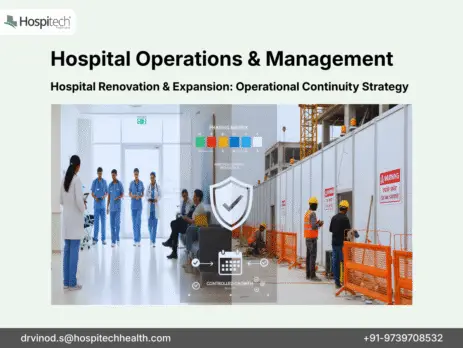
Hospital Renovation Without Disruption: A Strategic Guide for Indian Healthcare Leaders

Hospital renovations in India fail more often than they succeed—not due to poor construction, but because operations are treated as an afterthought. Learn the strategic phasing matrix, ICRA-compliant infection control protocols, and the six non-negotiable systems that protect revenue, patient safety, and staff trust during expansion.

Getting Your Hospital Licensed in India: A Realistic Guide for 2025

Hospital licensing in India requires parallel approvals from health authorities, fire departments, pollution control boards, and specialty regulators like AERB. Most 50-bed hospitals take 6–8 months and ₹5–10 lakh to become fully compliant. Starting approvals early and following state-specific rules is the only reliable way to avoid costly delays.

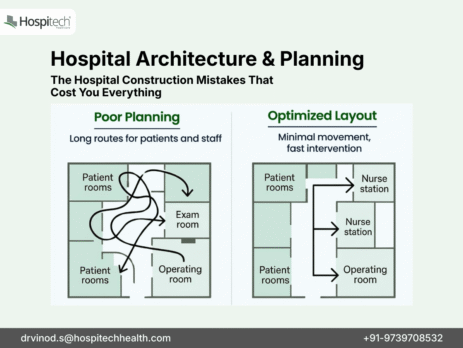
The Hospital Construction Mistakes ThatCost You Everything

Hospital architecture and planning mistakes often remain invisible until operations begin—when long patient routes, inefficient layouts, and delayed clinical response start impacting care quality and profitability. This article breaks down common hospital construction and planning errors, explains how poor layout design affects patient flow and staff efficiency, and shows how...

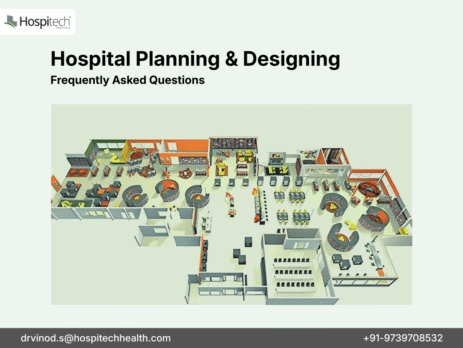
Frequently Asked Questions (FAQ) on Hospital Planning & Designing

Hospital infrastructure projects fail when systems are planned in isolation. Our FAQ page explains how we integrate architecture, engineering, clinical workflows, patient experience, and renovation planning into one coordinated framework—ensuring safer, faster, and future-ready hospitals. From handling all systems under one project to optimizing existing plans and safeguarding patient care,...

How Long Does a Hospital Feasibility Study Take? A Stage-by-Stage Timeline for 2025

A hospital feasibility study typically takes 6–18 weeks, depending on project size, location, and data depth. This guide breaks down each stage — from scoping and market research to regulatory checks and financial modelling — so promoters, doctors, and investors can plan realistically and avoid costly delays in 2025.