
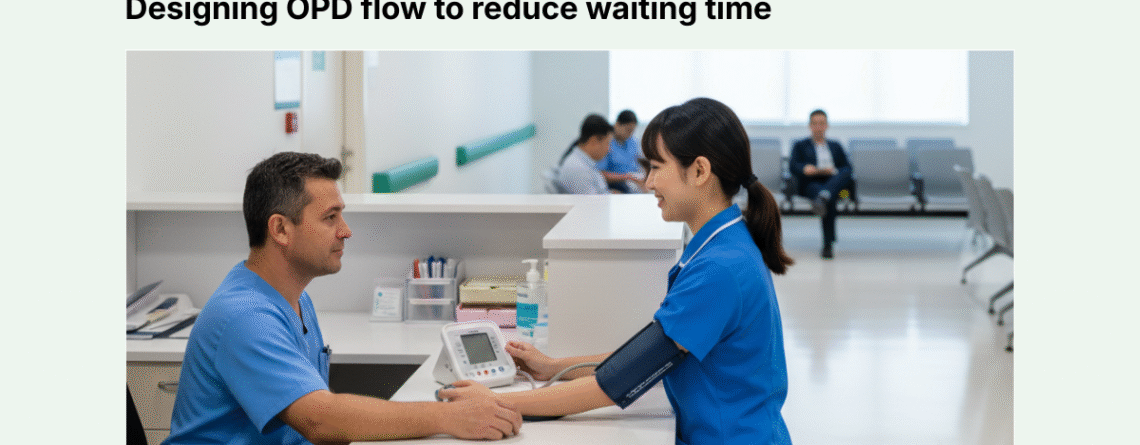
Designing OPD flow to reduce waiting time
How can hospitals reduce OPD waiting time quickly?
Hospitals can reduce OPD waiting time by implementing three immediate changes: introducing a token-based appointment system to regulate patient inflow, establishing a rapid triage process to prioritize cases, and creating dedicated fast-track lanes for simple consultations. These foundational changes, combined with proper staffing alignment and digital queue management, can reduce average waiting times by 40-60% within the first month of implementation.
14 proven ways to reduce OPD waiting time
- Implement advance appointment scheduling – distribute patient load across time slots to prevent overcrowding during peak hours
- Deploy digital token systems – replace manual queues with automated token dispensers linked to real-time digital displays
- Establish efficient triage protocols – quickly categorize patients by urgency and direct them to appropriate care pathways
- Create express consultation lanes – dedicate specific counters for follow-ups, prescription renewals, and minor ailments
- Optimize registration processes – use pre-registration, online forms, and self-service kiosks to minimize front-desk bottlenecks
- Integrate diagnostics with consultation – co-locate labs and imaging near consultation rooms to reduce transit time
- Enable parallel processing – allow billing, pharmacy, and documentation to happen simultaneously rather than sequentially
- Standardize consultation duration – set realistic time allocations per patient type while building buffer time for complex cases
- Deploy mobile registration units – use tablets or mobile carts to register patients in waiting areas, reducing counter queues
- Implement real-time queue monitoring – display expected wait times on screens so patients can manage their expectations
- Utilize telemedicine for follow-ups – reduce physical OPD load by conducting routine follow-up consultations virtually
- Optimize pharmacy workflow – pre-pack common medications and use automated dispensing systems
- Cross-train support staff – enable flexible deployment of personnel during peak hours across registration, billing, and support functions
- Establish feedback loops – regularly analyze bottleneck data and conduct patient satisfaction surveys to identify improvement areas
OPD flow design framework
Appointment system
A well-designed appointment system is the foundation of efficient hospital OPD management. Implement time-slot booking with staggered intervals (typically 15-30 minutes depending on specialty) to control patient inflow. Offer multiple booking channels including phone, website, mobile app, and walk-in registration. Build in 20% buffer capacity for emergency walk-ins and urgent cases. Use predictive analytics to identify high-demand days and adjust slot availability accordingly. Send automated SMS or email reminders 24 hours before appointments to reduce no-shows, which typically account for 15-20% of scheduled slots.
Tokenization
Digital tokenization replaces chaotic physical queues with organized patient flow management. Deploy touch-screen kiosks or QR-code scanners at entry points where patients receive numbered tokens linked to their appointment type. Integrate tokens with a centralized display system showing current serving numbers, expected wait times, and consultation room assignments. Use color-coded tokens to differentiate between new patients, follow-ups, and priority cases. The system should automatically alert patients via SMS when their turn approaches, allowing them to wait comfortably in designated areas or even step out briefly.
Triage
Effective triage ensures the right patients see the right healthcare providers without delay. Position trained triage nurses at the entry point to conduct rapid assessments within 2-3 minutes per patient. Use standardized triage protocols to categorize patients into urgent, semi-urgent, and non-urgent categories. Create separate pathways: critical cases move directly to emergency response, moderate cases receive priority tokens, and stable patients follow standard flow. Document vital signs and chief complaints during triage to save consultation time later.
Billing
Billing processes often create unnecessary bottlenecks in OPD flow. Shift to point-of-service billing where charges are calculated immediately after consultation rather than requiring a separate billing counter visit. Integrate the hospital information system (his) with electronic medical records so billing automatically generates based on services rendered, prescriptions issued, and diagnostics ordered. Offer multiple payment options including digital wallets, cards, and UPI to speed up transactions. For insured patients, implement real-time insurance verification and pre-authorization during registration to avoid payment delays post-consultation.
Diagnostics
Co-locating diagnostic facilities near consultation areas dramatically reduces OPD waiting time. Design cluster layouts where labs, x-ray, ECG, and other diagnostic units are within 50-100 meters of consultation rooms. Implement POCT (point of care testing) services for basic tests (blood sugar, hemoglobin, urine analysis) with results available within a few minutes. Use pneumatic tube systems or dedicated runners to transport samples from OPD to centralized labs. Integrate diagnostic reporting systems with the HIS so doctors can view results digitally without waiting for physical reports. Establish clear protocols for ordering tests during consultation to enable immediate specimen collection.
Pharmacy
Pharmacy operations should support rapid medication dispensing while maintaining safety. Analyze prescription patterns to identify the top 100 most-prescribed medications and maintain ready stock with pre-labeled packaging. Use barcode scanning to minimize dispensing errors and speed up the process. Create separate counters for chronic disease medication refills versus new prescriptions. Implement a shelf-pick system where common medications are organized alphabetically in easily accessible racks. For complex prescriptions requiring compounding or counseling, establish a separate area to prevent blocking the main dispensing counter. Display estimated dispensing time on queue screens.
Layout design tips
Zone-based architecture is critical for reducing OPD waiting time. Organize the OPD into distinct functional zones: registration and waiting zone, consultation zone, diagnostic zone, pharmacy zone, and billing/exit zone. Ensure unidirectional patient flow from entry to exit, minimizing crisscrossing pathways that create confusion and congestion.
Design adequate waiting spaces with seating capacity of at least 1.5 times the hourly patient volume. Include separate waiting areas for pediatrics, infectious cases, and general patients. Position waiting areas with clear sightlines to display boards showing token numbers.
Create consultation room clusters by specialty, with 4-6 rooms per cluster sharing common support areas. This allows flexible doctor deployment and efficient nurse support. Each consultation room should be 100-120 square feet with proper soundproofing for privacy.
Incorporate digital wayfinding signage at decision points with clear directional arrows, room numbers, and color-coded paths for different patient categories. Use floor markings to guide patient movement and maintain social distancing where required.
Staffing models
Adopt flexible rostering aligned with patient arrival patterns. Analyze historical data to identify peak hours (typically 9-11 am and 5-7 pm) and schedule 60-70% of clinical staff during these windows. Deploy support staff on staggered shifts to ensure continuous coverage from registration through pharmacy.
Implement a hub-and-spoke model where senior specialists consult in dedicated rooms while rotating residents or junior doctors conduct initial assessments in adjacent rooms, presenting filtered cases to seniors. This increases throughput while maintaining quality.
Use floating support staff who can be dynamically assigned to bottleneck areas—registration during morning rush, billing during afternoon peak, or pharmacy during evening hours. Cross-train these personnel across multiple functions.
Establish nurse-led fast-track clinics for specific conditions like diabetes monitoring, wound dressing, or immunizations, freeing physicians to focus on complex consultations.
Technology enablers
Hospital information system (his) integration is the backbone of efficient hospital OPD management. A comprehensive his connects registration, EMR, billing, diagnostics, and pharmacy on a single platform, eliminating redundant data entry and reducing errors.
Queue management software with ai-powered prediction can forecast wait times based on current patient load, doctor availability, and historical consultation durations. It dynamically adjusts token flow and sends real-time updates to patients.
Mobile applications empower patients to book appointments, view queue status, make payments, and access reports from their smartphones, reducing physical touchpoints and administrative burden.
Self-service kiosks for registration and check-in can handle 40-50% of routine tasks, freeing front-desk staff for complex queries and assistance.
Telemedicine platforms integrated with OPD systems allow seamless transition between physical and virtual consultations, particularly valuable for follow-ups and chronic disease management.
Business intelligence dashboards provide real-time visibility into OPD performance metrics, enabling managers to identify bottlenecks and make immediate operational adjustments.
KPIs to track
Monitor these key performance indicators to measure success in reducing OPD waiting time:
Average waiting time per patient – measure from registration to consultation start; target under 30 minutes for appointments, under 60 minutes for walk-ins
Door-to-doctor time – total time from OPD entry to seeing a physician; benchmark at 45-60 minutes
Consultation duration variance – track whether consultations stay within allocated time slots; excessive variance indicates scheduling issues
Patient throughput per hour – number of patients completing the entire OPD journey; higher numbers indicate efficient flow
No-show rate – percentage of booked appointments where patients don’t arrive; target below 10%
Service point utilization – percentage of time each registration counter, consultation room, or pharmacy counter is actively serving patients; optimal range is 70-85%
Patient satisfaction scores – regular surveys specifically asking about wait time perception and overall experience
Queue abandonment rate – percentage of patients who leave before completing treatment due to long waits
Diagnostic turnaround time – average time from test order to result availability
Billing transaction time – average duration per billing interaction; target under 3 minutes
Before–after scenarios
Scenario: mid-sized hospital (200 OPD patients/day)
Before optimization:
- Average waiting time: 85 minutes
- Patient complaints: 45 per month regarding wait times
- Doctor idle time: 15% due to irregular patient flow
- Missed appointments: 22%
- Paper-based processes causing 20-minute registration delays
- Patients visiting 4-5 different counters for complete service
After implementing optimized OPD flow:
- Average waiting time: 32 minutes (62% reduction)
- Patient complaints: 8 per month (82% reduction)
- Doctor idle time: 6% with steady patient flow
- Missed appointments: 11% (automated reminders reduced no-shows)
- Digital registration averaging 5 minutes
- Integrated flow requiring only 2 counter visits (registration and pharmacy)
- Patient satisfaction scores improved from 3.2/5 to 4.3/5
- Daily patient capacity increased to 260 without adding doctors
Key interventions: implemented appointment system with 20-minute slots, deployed 3 self-service registration kiosks, established triage desk with two nurses, integrated his connecting all departments, created fast-track lane for follow-ups, co-located stat lab near consultation rooms, and introduced SMS based queue updates.
Sample OPD flow
Optimized OPD patient journey:
Entry point: patient arrives at OPD entrance where digital signage directs them to appropriate channels based on appointment status.
Registration stage: patients with appointments scan QR code or enter mobile number at kiosk for instant check-in, receiving digital token. Walk-in patients use self-service kiosks for new registration or approach assisted counters for complex cases. Insurance verification happens automatically during registration.
Triage station: all patients pass through triage where a nurse conducts rapid assessment (vitals, chief complaint, urgency level) within 3 minutes. System assigns priority level and updates estimated wait time.
Waiting area: patients proceed to specialty-specific waiting zones with comfortable seating and clear display boards. Digital screens show current token numbers, expected wait times, and consultation room assignments. Mobile app sends notification when turn approaches.
Consultation zone: patient enters assigned consultation room when called. Doctor accesses complete patient history, previous visit notes, and current vital signs through EMR. If diagnostics are needed, orders are placed electronically. Consultation concludes with digital prescription generation.
Diagnostic pathway (if required): patient receives SMS with token number for diagnostic services. Co-located lab or imaging center processes tests with results automatically uploaded to patient’s EMR. Patient returns to waiting area if additional consultation is needed, or proceeds to pharmacy.
Pharmacy counter: electronic prescription automatically queues at pharmacy. Patient scans token at collection point. Pharmacist retrieves pre-packed medications, scans barcodes for verification, and dispenses with brief counseling. Billing is integrated—no separate billing counter visit required for most patients.
Exit and feedback: patient completes payment via integrated counter or digital payment. Exit kiosk offers quick satisfaction survey. Follow-up appointments are scheduled digitally with confirmation SMS. Total journey time tracked and recorded for continuous improvement analysis.
FAQs
1. What is the ideal OPD waiting time target?
Industry best practice suggests an average waiting time of 30 minutes for scheduled appointments and under 60 minutes for walk-in patients. However, this varies by hospital type, specialty, and patient complexity.
2. How much does implementing an OPD management system cost?
Basic digital queue management systems start around INR 2,00,000 – INR 4,00,000, while comprehensive his integration can range from INR 10,00,000 – INR 20,00,000 depending on hospital size and features. Roi typically occurs within 12-18 months through increased patient capacity and reduced staffing inefficiencies.
3. Can small clinics benefit from OPD flow optimization?
Absolutely. Even simple interventions like appointment scheduling, basic tokenization using free apps, and designated waiting zones can reduce wait times by 30-40% in small clinics without significant investment.
4. How do we handle emergency cases in a structured OPD flow?
Triage systems are designed to identify emergencies immediately and bypass normal queues. Emergency patients receive priority tokens and immediate attention, while the system automatically adjusts wait time estimates for other patients.
5. What if patients don’t show up for scheduled appointments?
Implement automated reminder systems (SMS/email) 24 hours before appointments. Maintain a waitlist of walk-in patients who can fill cancelled slots. Consider overbooking by 10-15% in historically high no-show time slots.
6. How can we reduce consultation time without compromising quality?
Optimize pre-consultation preparation by having nurses collect vitals and medical history. Use templated EMR forms for common conditions. Delegate routine tasks like prescription printing and follow-up scheduling to support staff. Focus doctor time on clinical decision-making.
7. What percentage of patients should be given appointments vs walk-ins?
A balanced approach is 70% scheduled appointments and 30% walk-in capacity. This ensures predictable flow while accommodating urgent cases and patients without advance planning ability.
8. How frequently should we review and adjust our OPD flow processes?
Conduct weekly reviews of key metrics for the first 3 months after implementing changes, then shift to monthly reviews. Quarterly comprehensive assessments should include patient feedback and staff input.
9. What role does patient education play in reducing waiting time?
Significant. Educating patients about appointment schedules, required documents, online services, and expected wait times reduces confusion, improves compliance, and decreases time spent on clarifications.
10. How do we manage specialty-specific challenges in OPD flow?
Some specialties like ophthalmology require longer consultation times, while orthopedics might need adjacent imaging. Customize slot durations by specialty, co-locate relevant diagnostics, and consider specialty-specific fast-track options.
11. Can telemedicine really reduce OPD congestion?
Yes. Studies show 30-40% of follow-up consultations can be effectively handled via telemedicine, freeing physical OPD slots for new patients and complex cases requiring examination.
12. How do we get staff buy-in for new OPD systems?
Involve frontline staff in planning and pilot testing. Provide comprehensive training. Demonstrate how new systems reduce their workload and stress. Share success metrics regularly to build confidence.
13. What’s the biggest mistake hospitals make in OPD flow design?
Focusing only on technology without redesigning workflows. Digital systems layered on inefficient processes simply automate chaos. First optimize the process flow, then implement supporting technology.

Leave a Reply